
The Asian Games 2026 marked another important chapter in India’s sporting journey. Held in Aichi-Nagoya, Japan, from September 19 to October 4, the 20th edition of the Asian Games brought together leading athletes from across Asia to compete in one of the world’s most prestigious multi-sport competitions.
For India, the tournament represented an opportunity to demonstrate the progress made across traditional strengths such as athletics, shooting, wrestling, boxing, and badminton, alongside emerging sports and team competitions.
India entered the tournament following its historic performance at the 2023 Asian Games in Hangzhou, where the country secured a record 107 medals. Expectations were therefore high for another competitive campaign.
Although India did not surpass its previous record, the country finished the 2026 Asian Games with 85 medals, including 21 gold, 27 silver, and 37 bronze, securing fourth place in the overall medal standings. A contingent of 503 Indian athletes participated across 36 disciplines, highlighting the country’s growing sporting ambitions.
From established champions to emerging talents, the Asian Games 2026 featured numerous Indian athletes whose performances attracted attention. This article explores the biggest sports, notable competitors, and key developments from India’s campaign.
Asian Games 2026: Tournament Overview
The Asian Games are organised by the Olympic Council of Asia and take place every four years. Often described as Asia’s equivalent of the Olympic Games, the competition features athletes from across the continent participating in individual and team sports.
The 2026 edition was hosted by Japan, with Aichi Prefecture and Nagoya serving as the principal locations.
| Tournament Details | Information |
| Tournament | 20th Asian Games |
| Host | Aichi-Nagoya, Japan |
| Dates | September 19 – October 4, 2026 |
| Indian athletes | 503 |
| India’s medals | 85 |
| India’s gold medals | 21 |
| India’s final position | 4th |
India’s campaign demonstrated the importance of developing a diverse sporting programme rather than relying on only a few established disciplines.
Athletics, shooting, and archery made particularly significant contributions, while team sports such as cricket, hockey, and kabaddi delivered memorable gold-medal performances.
India’s Performance at the Asian Games 2026
India’s final tally of 85 medals represented the country’s second-highest medal total in Asian Games history.
Although the number was lower than the 107 medals achieved at Hangzhou 2023, India’s performances across multiple disciplines demonstrated continued competitiveness at the continental level.
21
Gold
27
Silver
37
Bronze
India’s confirmed medal tally at the 2026 Asian Games.
Athletics contributed 24 medals, shooting added 15, and archery secured nine. These three disciplines accounted for more than half of India’s total medal tally.
The performances also highlighted the importance of specialist coaching, international competition exposure, and investment in sports infrastructure.
For fans following the country’s progress, the tournament provided valuable insights into which disciplines could become increasingly important in future Asian Games and Olympic competitions.
Top Indian Athletes to Watch at the Asian Games 2026
1. Neeraj Chopra – Javelin Throw
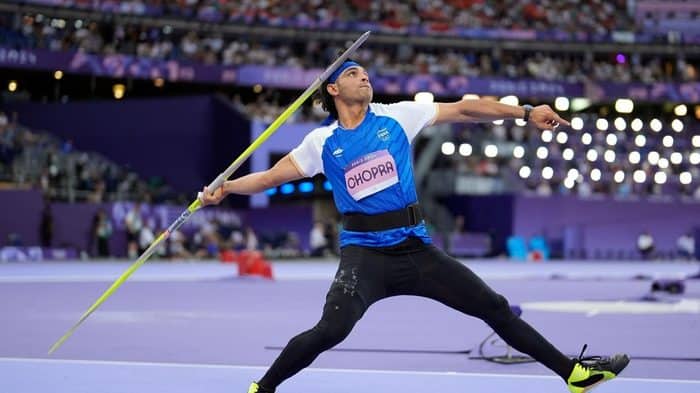
Neeraj Chopra remains one of the most influential figures in Indian athletics. His Olympic achievements and international success have helped transform javelin throwing into one of the country’s most closely followed track-and-field events.
Chopra’s performances have also inspired a new generation of Indian throwers to compete at the highest level.
His technical consistency, powerful approach, and ability to perform under pressure have established him as an important benchmark for Indian athletics.
Although Chopra was a prominent name in discussions about India’s preparations for the 2026 Asian Games, he was not part of the country’s final athletics entry list.
Instead, India’s javelin challenge included athletes such as Rohit Yadav and Yash Vir Singh, illustrating the growing depth of talent in the discipline.
The development of multiple competitive javelin throwers is particularly encouraging for India’s long-term prospects.
2. Avinash Sable – Steeplechase and Distance Running
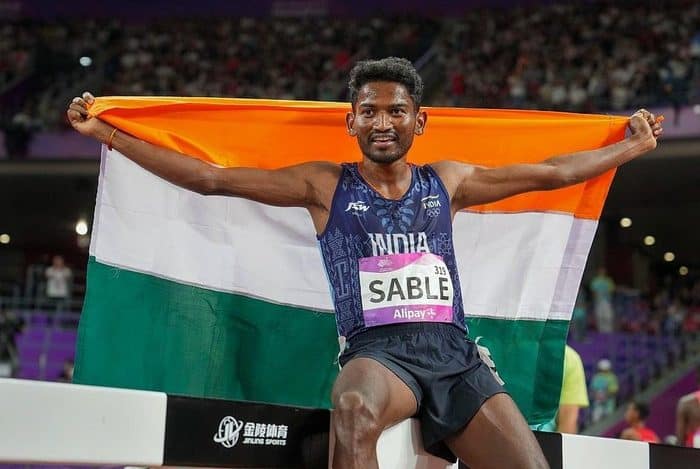
Avinash Sable has played a major role in raising India’s profile in long-distance track events.
Known for his performances in the men’s 3000m steeplechase, Sable combines endurance, tactical awareness, and the ability to maintain speed while clearing obstacles.
His success has helped demonstrate that Indian athletes can compete internationally in events historically dominated by runners from other countries.
Sable was included in India’s 2026 athletics entries for the 3000m steeplechase and 5000m.
His presence reflected India’s determination to remain competitive in distance-running events, where pacing strategies and race positioning often determine the outcome.
Beyond individual medals, Sable’s career has encouraged greater attention toward endurance training and international racing opportunities for Indian athletes.
3. PV Sindhu – Women’s Badminton
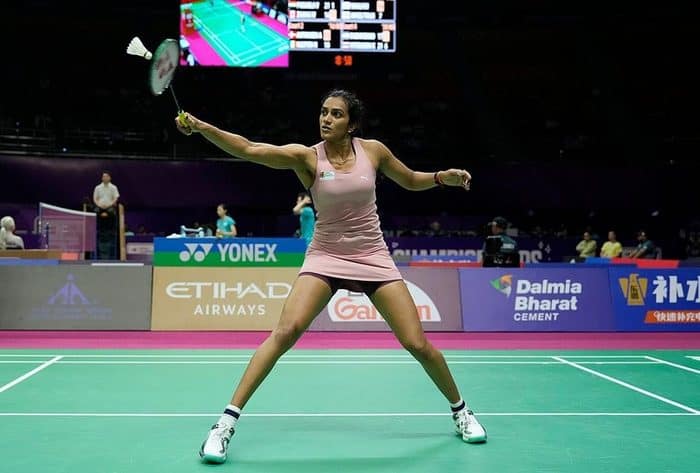
PV Sindhu is among India’s most recognisable badminton players and one of the country’s most successful international competitors.
Her achievements include two Olympic medals and a BWF World Championships singles title.
Sindhu’s aggressive attacking game, powerful smashes, and experience against elite Asian opponents have made her an important figure in Indian badminton.
She was selected for India’s women’s badminton squad at the 2026 Asian Games, where the competition included strong challengers from China, Japan, South Korea, and other badminton nations.
Her participation also brought valuable experience to a team featuring younger players such as Unnati Hooda and Tanvi Sharma.
For Indian badminton, the combination of established champions and emerging athletes remains essential to long-term development.
4. Lakshya Sen – Men’s Badminton
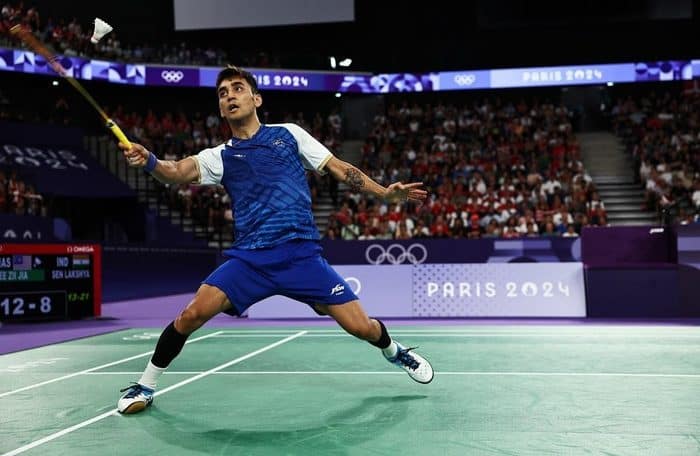
Lakshya Sen represents the younger generation of Indian badminton players capable of competing against the world’s best.
His quick movement, defensive skills, and ability to transition into attacking rallies have helped him establish a reputation as a dangerous singles competitor.
Sen was selected to lead India’s men’s singles challenge at the Asian Games 2026.
The men’s singles competition was particularly demanding because Asian players occupy many of the leading positions in international badminton.
For Sen, competing against elite opponents provides opportunities to refine his tactical approach, improve consistency, and gain experience in high-pressure matches.
His development remains important for India’s ambitions in major badminton championships.
Readers interested in the country’s wider sporting progress can explore additional coverage on Dafabet Sports India.
5. Jyothi Yarraji – Women’s 100m Hurdles
Jyothi Yarraji has become one of India’s leading sprint hurdlers.
Her performances have attracted attention because sprint hurdles demand exceptional speed, precise technique, and consistency over a short distance.
Unlike longer running events, a small mistake during a hurdle clearance can significantly affect the final result.
Yarraji was included in India’s Asian Games 2026 athletics squad for the women’s 100m hurdles.
Her progress reflects the improvement of Indian athletes in technical track events that require specialist training and international exposure.
The increasing competitiveness of Indian hurdlers could create additional medal opportunities at future continental competitions.
6. Satwiksairaj Rankireddy and Chirag Shetty – Men’s Doubles Badminton
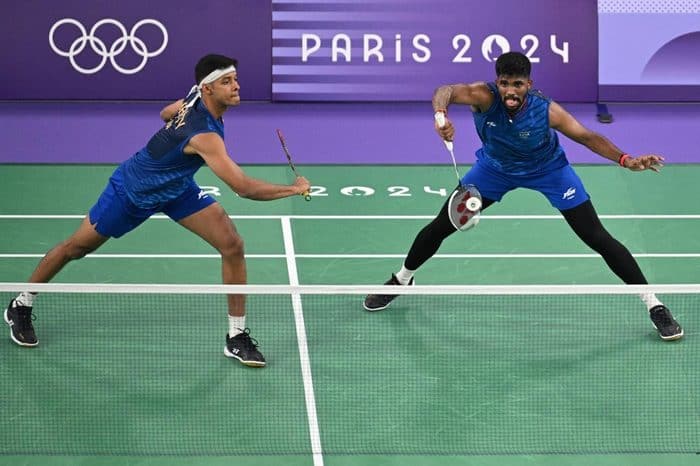
Satwiksairaj Rankireddy and Chirag Shetty have helped redefine India’s reputation in men’s doubles badminton.
The pair are known for their attacking combinations, powerful smashes, and effective movement around the court.
Their partnership has demonstrated that India can compete with established doubles nations such as Indonesia, China, Japan, and South Korea.
Both players were selected for the Asian Games 2026 badminton squad.
Their experience in major tournaments made them important members of India’s team, while their success continued to inspire younger doubles partnerships.
For Indian badminton, developing strong doubles teams is essential because major international competitions award medals across singles, doubles, and mixed doubles categories.
Sports Where India Stood Out at the Asian Games 2026
Athletics: India’s Largest Medal Contributor
Athletics remained one of India’s most important disciplines at the Asian Games 2026.
The country collected 24 medals across track-and-field events, demonstrating strength in running, jumping, and throwing competitions.
Indian athletics has benefited from the development of specialist training centres, improved coaching programmes, and increased international participation.
Events such as the javelin throw, long jump, triple jump, steeplechase, and hurdles have attracted greater attention in recent years.
Athletes including Avinash Sable, Jyothi Yarraji, Gulveer Singh, Parul Chaudhary, and Tajinderpal Singh Toor represented the depth of India’s athletics programme.
The challenge for India is to translate strong continental performances into consistent results at world championships and the Olympic Games.
Shooting: Precision and Consistency
Shooting has become one of India’s most reliable international sports.
At the Asian Games 2026, Indian shooters secured 15 medals, including three gold medals.
The sport requires exceptional concentration, technical precision, and the ability to control emotions under pressure.
India’s shooting programme has developed through junior competitions, international exposure, and improved training facilities.
The country has also benefited from a growing number of young shooters capable of challenging experienced international competitors.
Shooting events are particularly important because multiple individual and team categories provide opportunities for medals.
India’s performance in Japan reinforced the country’s position as a competitive shooting nation.
Archery: A Major Source of Gold Medals
Archery delivered one of India’s strongest performances at the 2026 Asian Games.
Indian archers won nine medals, including five gold medals, making archery the country’s largest contributor to the gold-medal tally.
The sport combines physical control, concentration, technical accuracy, and mental resilience.
India has developed strong competitors across different archery disciplines, supported by improved coaching and international tournament participation.
The results in Japan demonstrated the value of building specialised programmes capable of producing consistent performances.
Archery’s contribution also showed that India’s medal success increasingly depends on a broad range of sports rather than traditional favourites alone.
Wrestling and Boxing: India’s Combat Sports Strength
Wrestling and boxing have historically been important sports for India at international competitions.
Both disciplines continued to contribute medals at the Asian Games 2026.
India secured six medals in wrestling and six in boxing, with the two sports combining for five gold medals.
Wrestling requires strength, technique, endurance, and tactical intelligence. Boxing similarly demands physical conditioning, defensive awareness, and precise attacking combinations.
India’s established wrestling culture and growing boxing infrastructure have helped create competitive athletes across different weight categories.
Maintaining this success will require continued investment in grassroots programmes, athlete development, and international competition experience.
Team Sports: Cricket, Hockey and Kabaddi
Cricket: India’s Continued Continental Strength
Cricket remains India’s most popular sport and an important part of the country’s sporting identity.
At the Asian Games 2026, India won gold medals in both the men’s and women’s cricket competitions.
The men’s team defeated Pakistan by 19 runs in the final, delivering one of the tournament’s notable results for Indian supporters.
The success highlighted India’s strength in limited-overs cricket and the depth of talent available across domestic and international competitions.
Fans interested in cricket developments, tournament previews, and match analysis can explore the cricket coverage on Dafabet Sports India.
Hockey: Maintaining a Strong Tradition
Field hockey has a special place in Indian sporting history.
India’s men’s and women’s teams both won gold medals at the 2026 Asian Games, making hockey one of the country’s most successful team sports at the tournament.
The men’s team defeated Malaysia 5–1 in the final, successfully defending its continental title.
The results demonstrated India’s ability to combine technical skills, tactical organisation, and physical fitness against strong Asian opposition.
Hockey’s continued development remains important for India’s ambitions at future international championships.
Kabaddi: A Traditional Indian Sporting Powerhouse
Kabaddi is deeply connected to India’s sporting culture and has grown into a widely followed professional sport.
At the Asian Games 2026, India captured both men’s and women’s kabaddi gold medals.
The sport requires explosive speed, agility, teamwork, and tactical awareness.
India’s strong domestic kabaddi structure has contributed to the development of highly skilled players capable of competing internationally.
However, the increasing competitiveness of other Asian nations means that India must continue developing its talent pipeline.
The success in Japan reinforced kabaddi’s importance within India’s overall Asian Games strategy.
Emerging Sports and India’s Future Opportunities
One of the most interesting aspects of the Asian Games is the opportunity for emerging sports to gain international attention.
India participated in a diverse range of disciplines at the 2026 edition, including newer competitive categories.
Esports and Competitive Gaming
Esports has developed into a significant global industry, attracting professional players, sponsors, and millions of viewers.
Its inclusion in major multi-sport competitions reflects the growing recognition of competitive gaming.
For India, esports offers opportunities to develop professional teams, improve gaming infrastructure, and create international pathways for talented players.
However, success requires more than individual gaming ability. Professional esports also demands communication, teamwork, tactical preparation, and consistent practice.
The development of structured competitions and professional organisations could help India become more competitive internationally.
Readers can discover more gaming-related coverage through Dafabet Sports India.
Golf, Squash and Other Disciplines
India also demonstrated competitiveness in sports that receive comparatively less mainstream attention.
Golf contributed two medals, while squash produced five.
These results highlight the importance of supporting athletes outside India’s most popular sports.
Developing stronger national training systems, improving access to facilities, and increasing sponsorship opportunities could help these disciplines grow further.
How the Asian Games 2026 Compare with Previous Editions
India’s Asian Games performances have improved considerably over the past decade.
The country’s results at recent editions demonstrate how investment in athlete development has translated into stronger international performances.
| Asian Games | India’s Total Medals |
| Incheon 2014 | 57 |
| Jakarta-Palembang 2018 | 70 |
| Hangzhou 2023 | 107 |
| Aichi-Nagoya 2026 | 85 |
Although India recorded fewer medals in 2026 than in 2023, the country remained among Asia’s leading sporting nations.
The comparison also highlights the challenge of maintaining consistent results when host nations, competition formats, athlete availability, and sporting programmes change.
Rather than focusing exclusively on the total medal count, India’s future sporting development will depend on building sustainable systems capable of producing international-level athletes across multiple generations.
What the Asian Games 2026 Mean for Indian Sports
The Asian Games 2026 provided valuable lessons for India’s sporting future.
First, the tournament reinforced the importance of investing in disciplines where India already possesses strong competitive foundations.
Athletics, shooting, archery, wrestling, boxing, and team sports all demonstrated their ability to contribute significantly to the medal tally.
Second, the Games highlighted the value of developing younger athletes alongside experienced international competitors.
Emerging talents benefit from participating in major tournaments because they gain exposure to different playing styles, competitive environments, and pressure situations.
Third, India’s results demonstrated the importance of sports science, nutrition, injury prevention, and professional coaching.
As competition across Asia becomes increasingly intense, these factors can determine whether an athlete finishes on the podium.
Finally, the Asian Games showed why India must continue supporting a broad range of sports.
Expanding opportunities beyond cricket and other traditionally popular disciplines can help create a more balanced and successful national sporting programme.
Conclusion
The Asian Games 2026 demonstrated India’s continued progress as a competitive sporting nation.
With 85 medals and fourth place in the overall standings, India delivered a strong performance across a diverse range of disciplines.
Athletics, shooting, and archery made major contributions, while cricket, hockey, and kabaddi provided important gold-medal victories.
Established athletes such as PV Sindhu, Lakshya Sen, and Avinash Sable remained influential figures in India’s sporting landscape, while emerging competitors demonstrated the importance of developing the next generation.
Looking ahead, India’s challenge will be to build on these achievements through stronger grassroots programmes, international exposure, and continued investment in athlete development.
For more sports news, tournament analysis, and updates on Indian athletes, visit Dafabet Sports India.