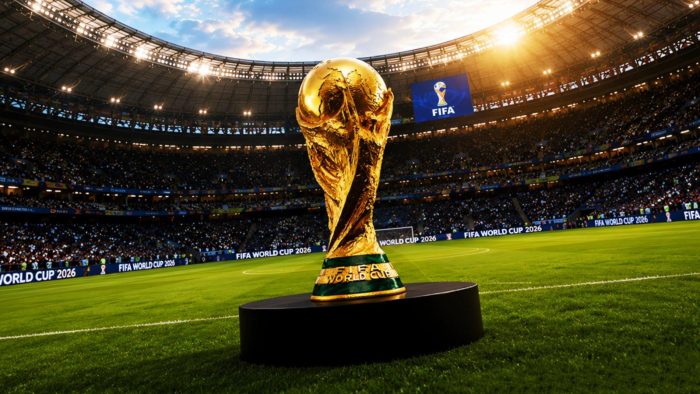
As the 2026 FIFA World Cup approaches, football enthusiasts across the globe are anticipating, which top national teams in World Cup 2026 are best positioned to win the tournament? Although the tournament is still some time off, current performance levels, squad strength, and recent results in international competitions offer meaningful clues about how FIFA World Cup 2026 power rankings are preparing for football’s premier competition.
This edition of the World Cup is generating exceptional excitement. Co-hosted by the United States, Canada, and Mexico, it will introduce an expanded 48-team format with a total of 104 matches scheduled which is happening for the first time in tournament history. The expanded structure not only allows more countries to participate but also raises the chances of surprising results, breakout performances, and dramatic knockout-stage encounters.
In this context, early World Cup 2026 power rankings serve as a helpful tool. Unlike the official FIFA rankings, these assessments aim to consider a team’s present capabilities and readiness. They take into account factors such as recent form, squad depth, tactical matchups, individual player quality, coaching continuity, and experience in high-stakes tournaments, offering a clearer picture of which teams would be strongest in the competition.
However, FIFA World Cup 2026 team rankings are not the ultimate. Injuries, the emergence of young players, qualification outcomes, changes in management, and fluctuations in form can all shift the balance significantly before the first match is played. A team currently outside the top five could rise as a serious World Cup 2026 contender, while a leading favorite might lose ground due to setbacks or absences.
As interest grows, football fans often compare expert evaluations with live betting odds on platforms like Dafabet, where shifting probabilities reflect changing perceptions of each team’s title prospects. Together, World Cup 2026 power rankings and betting markets help illustrate how the race for the trophy is evolving.
In this article, we unveil our preliminary FIFA World Cup 2026 Power Rankings, analyzing national teams based on their current trajectory. We identify the leading title prospects, spotlight potential under-the-radar challengers, highlight key players who could shape the outcome, and assess which nation seems best prepared to claim the ultimate prize.
How We Ranked the Teams
Evaluating the FIFA World Cup 2026 power rankings goes well beyond consulting the official FIFA standings. While those rankings offer a helpful reference point, they don’t always consider which teams are best prepared for the unique challenges of the World Cup 2026. Success in such tournaments depends on consistency, tactical adaptability, mental toughness, and the ability to deliver under intense pressure.
To create these FIFA World Cup 2026 power rankings, we analyzed each team using several critical factors that are most likely to influence performance at major international events like FIFA World Cup 2026.
Recent International Results
A team’s current form is one of the most important indicators of a team’s preparedness. The teams that have maintained consistency throughout its impressive performance in recent international tournaments, continental championships, and World Cup qualifiers naturally deserve higher rankings. Victories over top-tier opponents naturally carry more significance than wins against lower-ranked sides.
FIFA Rankings
The latest FIFA World Cup 2026 team rankings are not decisive on their own but provide useful context. Teams that consistently maintain top positions in global rankings generally shows long-term stability and competitiveness, making them serious World Cup 2026 contenders.
Squad Depth
Lifting the World Cup 2026 trophy demands more than a strong starting lineup. With the expanded 48-team format and a tight tournament schedule, squads with quality substitutes and multiple efficient players across every position on the pitch are more likely to maintain high performance throughout the competition.
Player Quality
Elite players often create the difference in the high-stake matches. Teams with world-class talent across all positions like attack, midfield, defence, and goalkeeping naturally earn better rankings. At the same time, the squad must be well-balanced between experienced leaders and emerging young stars for sustained success.
Coaching Stability
International football is much about tactical organization and individual brilliance. Team managers with a clear football intelligence and philosophy, strong leadership skills, and proven tournament experience guide their teams in the best possible way to bring significant improvements in the squad. Coaching stability also helps players to develop chemistry and execute strategies on the pitch more effectively.
Tournament Experience
History shows that teams with a strong World Cup pedigree get significant advantage and perform well even under pressure. Experience in group stage dynamics, knockout rounds, and decisive moments in demanding matches remains a valuable asset, particularly during the latter stages of the tournament.
Rankings That Will Continue to Evolve
The FIFA World Cup 2026 power rankings demonstrate an early evaluation but not the final prediction. Injuries, qualification outcomes, player development, and shift in tactical organizations will continue to streamline the top national teams of World Cup 2026 before kickoff reshaping the hierarchy. As the road to FIFA World Cup 2026 unfolds, football fans and sports analysts are following how the balance of power shifts. Many are comparing these evolving World Cup 2026 power rankings with the latest outright winner odds on Dafabet, where changes in team form and starting lineups are often reflected in the World Cup 2026 betting markets.
With these assessments, here is a list of our Top 10 FIFA World Cup 2026 Power Rankings which currently look best positioned to challenge for football’s most prestigious trophy.
Top 10 FIFA World Cup 2026 Power Rankings
The excitement for the FIFA World Cup 2026 title is already taking shape. Many World Cup 2026 favourites have already separated themselves from other qualifying nations through their consistent performance, high-level talent and years-long success in this tournament. These FIFA World Cup 2026 Power Rankings are evaluated based on a comprehensive combination of current form, squad depth, tactical matchups and tournament experience. The World Cup 2026 favourites help to identify the strongest World Cup 2026 contenders and lead to informed FIFA 2026 predictions.
1. France
France leads our list of FIFA World Cup 2026 power rankings as the strongest World Cup 2026 contender. Few nations can align the squad in terms of depth, balance, and excellence available across every position. Even in situations, when key players are unavailable, France presents their world-class talented substitutes, making them one of the best teams of FIFA 2026.
Kylian Mbappe is the lead attack of the team and is also the most dangerous player in the tournament. He is a proven performer in many international tournaments and multiple time winner of the Golden Boot award. His football intelligence and excellence are magnificently supported by his squad of new generation of talented midfielders and defenders, who add pace, technical ability, and tactical discipline to the team in such a way that France turn out to be one of the top national teams World Cup 2026.
Experience of World Cup finals and the high-stake matches of knockouts are an added psychological advantage to the team over less experienced opponents. Many members of the squad have already played such high-level international tournaments.
If France can retain its fitness levels throughout the tournament without any major unexpected event happening and focus on developing its emerging talents, it has all the qualities required to challenge for another World Cup title.
2. Spain
Spain has experienced an amazing transformation. The team has dedicated many years to rebuild its squad for extraordinary talent and excellent technical skills to be one of the potentially best teams of FIFA 2026 led by midfielder Rodri Hernandez. Emerging stars like Lamine Yamal and Pedri are the faces of one of the strongest but youngest team of FIFA World Cup 2026 bring creativity, energy, and confidence, revitalizing the team’s traditional possession-based style.
Under stable management, Spain maintains tactical consistency, controlling games through intelligent movement and sharp passing while staying defensively compact. The main uncertainty lies in whether this relatively inexperienced group can handle the intensity of late-stage knockout matches. But there’s no doubt about their talent.
3. Argentina
As reigning champions, Argentina remains a top contender. While the team gradually moves beyond the Messi era, the winning culture established in recent years remains intact. The rise of players like Julián Álvarez, combined with a solid midfield and organized defense, provides a strong foundation for another deep run.
Argentina excels in tactical flexibility—equally comfortable dominating possession, defending tightly, or launching quick counters based on the opponent. If the next generation continues to grow, the team could challenge for back-to-back titles.
4. Brazil
Brazil carries unmatched World Cup history and once again enters as a top favorite. The five-time champions boast exceptional attacking firepower, with players like Vinícius Júnior and other creative forwards capable of breaking down even the tightest defenses through pace, flair, and individual brilliance.
However, questions remain about consistency against elite teams. In recent tournaments, Brazil has sometimes struggled to turn dominance into results, particularly against well-structured European sides. Improving defensive balance while preserving their attacking identity could be key to reclaiming the trophy.
5. England
England continues to field one of the deepest and most balanced squads in international football. A mix of seasoned players and rising stars keeps the Three Lions among the top contenders for 2026.
With Jude Bellingham emerging as a leader, England has strength in midfield, diverse attacking options, and growing tactical maturity. The main hurdle has been converting strong performances into silverware. Despite reaching advanced stages in recent tournaments, they’ve fallen short in crucial moments. If progress continues, 2026 could offer their best chance in decades.
#6 Germany
Germany appears to be regaining its footing after a period of inconsistency. A renewed focus on youth development, paired with experienced leadership, has restored confidence in one of football’s most successful nations.
Known for tactical awareness and resilience in tournaments, Germany rarely stays out of contention for long. If younger players continue to develop, another deep run is entirely plausible.
#7 Portugal
Portugal fields one of the most technically proficient squads in the world. Beyond established stars, a new generation has emerged across all positions, giving the team impressive depth and versatility.
Their success will hinge on achieving tactical balance and turning possession into goals against top-tier opponents. With the right momentum, Portugal has everything needed to pursue its first World Cup title.
#8 Netherlands
The Netherlands remains one of Europe’s most tactically sound teams. Strong defensive structure, intelligent midfield play, and a clear playing identity make them tough opponents in tournament settings.
While their squad depth may not match that of France or Spain, the Dutch have repeatedly proven they can compete with the best.
#9 Morocco
Morocco made history at the last World Cup with one of the most surprising and inspiring runs in tournament memory. Defensive solidity, tactical discipline, and relentless collective effort remain central to their success.
With many key players entering their peak years, Morocco has the potential to challenge traditional favorites once again and cement its status as a serious contender.
#10 Uruguay
Uruguay rounds out the top ten thanks to a balanced mix of experienced internationals and exciting young talent. Historically, the team has thrived in major tournaments through resilience, defensive organization, and efficient finishing.
The current squad adds greater technical quality while preserving the fierce competitive spirit that defines Uruguayan football. If everything aligns, Uruguay could upset higher-ranked teams and produce another memorable campaign.
Teams Just Outside the Top 10 FIFA World Cup 2026 power rankings
Just because a team doesn’t make the top 10 doesn’t mean it can’t make a deep run at the FIFA World Cup 2026. International football is unpredictable, and history has repeatedly shown that well-organized teams can exceed expectations once the tournament begins.
The following nations narrowly missed our FIFA World Cup 2026 power rankings, but each has the quality to challenge higher-ranked opponents and potentially break into the top tier before kickoff.
Croatia
Croatia continues to outperform expectations on the international stage. Despite the gradual transition from its golden generation, the team remains tactically disciplined and highly competitive.
Its greatest strengths lie in midfield control, tournament experience, and the ability to perform under pressure. While squad depth is not as strong as some of Europe’s elite nations, Croatia’s resilience makes it a dangerous knockout-stage opponent that few favorites would want to face.
Belgium
Belgium is entering a new era after the decline of its celebrated “Golden Generation.” While several experienced players have moved on, an exciting crop of younger talent is beginning to emerge.
The challenge will be building chemistry quickly enough to compete with the world’s strongest teams. If the transition progresses smoothly, Belgium has enough individual quality to surprise many of the tournament favorites.
United States
As one of the three host nations, the United States will enjoy significant home support throughout the tournament. Combined with a youthful squad and increasing experience in European club football, the US team continues to develop into a genuine contender.
The biggest question is whether the team can consistently perform against elite opposition in the knockout rounds. If it can capitalize on home advantage and maintain tactical discipline, the United States could become one of the tournament’s biggest success stories.
Japan
Japan has earned widespread respect for its technical quality, tactical intelligence, and disciplined approach. In recent years, the Samurai Blue have demonstrated that they can compete with—and defeat—some of the world’s top national teams.
Their quick passing, organized pressing, and growing number of players competing in Europe’s top leagues make Japan one of the most dangerous teams outside the current top 10.
Mexico
Playing on home soil alongside the United States and Canada gives Mexico an added advantage heading into World Cup 2026. Passionate home support and familiarity with local conditions could help El Tri perform above expectations.
Although recent international performances have been inconsistent, Mexico has a long history of qualifying for the knockout stages. If the squad finds stability and key players hit top form, it has every chance of challenging for a place among the tournament’s leading contenders.
A Tight Race Heading into 2026
The gap between these teams and the current top 10 is smaller than many fans might think. A successful qualification campaign, the emergence of a breakout star, or improved consistency over the next several months could dramatically reshape the FIFA World Cup 2026 team rankings.
As the tournament approaches, supporters will continue to compare expert analysis with the latest outright winner odds on Dafabet, where changes in form and squad strength are often reflected in the evolving World Cup markets.