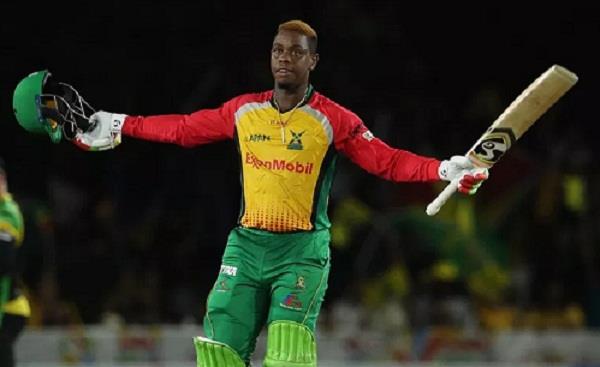
Cricket has experienced many transformations throughout its long history, but none have been as significant as the rise of Twenty20 (T20) cricket. Introduced in the early 2000s to make the game faster and more entertaining, T20 has evolved from an experimental format into the driving force behind cricket’s global growth. Today, major domestic leagues, international tournaments, and franchise competitions attract millions of fans, making T20 one of the most watched sporting formats worldwide.
For cricket enthusiasts in India, T20 has become an integral part of the sporting calendar. From the Indian Premier League (IPL) to international World Cups and numerous franchise competitions around the globe, fans enjoy almost year-round action featuring the world’s biggest cricket stars.
The explosive nature of T20 has also transformed the betting landscape. With frequent momentum swings, innovative batting techniques, strategic bowling changes, and exciting live betting opportunities, the format offers countless markets for cricket fans who enjoy analyzing matches before placing wagers.
Whether you are a lifelong cricket supporter or a newcomer exploring the sport, understanding how T20 has changed cricket provides valuable insight into its future. In this guide, we examine how the shortest format has reshaped playing styles, player development, fan engagement, global competitions, and sports betting.
The Birth of T20 Cricket
Cricket traditionally revolved around Test matches lasting up to five days before One Day Internationals (ODIs) gained popularity during the 1970s. While both formats attracted dedicated followers, they required significant time commitments from spectators.
Recognizing the need for a shorter and more entertaining version, cricket authorities introduced Twenty20 cricket in England in 2003. Each team would face only 20 overs, reducing the average match duration to approximately three hours.
The format immediately appealed to:
- Younger audiences
- Casual sports fans
- Television broadcasters
- Sponsors
- Stadium spectators
The fast pace created an atmosphere similar to other popular global sports leagues, making cricket easier for newcomers to understand.
Soon after its introduction, other countries adopted the format, and international T20 matches rapidly became a regular feature of the cricket calendar.
Why T20 Became So Popular
Several factors contributed to the explosive growth of T20 cricket.
Shorter Match Duration
One of the biggest advantages is convenience.
Instead of spending an entire day—or several days—watching a match, fans can enjoy a complete contest in a single evening.
This makes T20 particularly attractive for working professionals, students, and families.
Constant Action
Unlike longer formats where patience often determines success, T20 rewards aggressive cricket.
Every over matters.
Every boundary can change momentum.
Every wicket creates new opportunities.
Fans remain engaged throughout the match because the game rarely slows down.
Entertainment Beyond Cricket
Modern T20 leagues combine elite cricket with entertainment.
Spectators enjoy:
- Music
- Cheer squads
- Light shows
- Fan contests
- Interactive digital experiences
- Celebrity appearances
The overall event becomes much more than just a cricket match.
Global Superstars
T20 has allowed players from different countries to compete together.
Fans can watch:
- Virat Kohli
- Jasprit Bumrah
- Jos Buttler
- Rashid Khan
- Glenn Maxwell
- Nicholas Pooran
playing for the same franchise alongside international teammates.
This creates stronger global fan communities.
How T20 Changed Batting Forever
Perhaps the greatest impact of T20 cricket has been its influence on batting.
Traditional cricket rewarded patience and technique.
Modern T20 rewards innovation.
Today’s batters constantly search for scoring opportunities.
Examples include:
- Reverse sweeps
- Switch hits
- Ramp shots
- Scoop shots
- Upper cuts
- Lap shots
These strokes were once considered risky.
Now they are common at every professional level.
Higher Strike Rates
Batters no longer focus solely on averages.
Strike rate has become one of the most important performance indicators.
Players capable of scoring quickly often become more valuable than those who simply remain at the crease.
Power hitters are now essential for every successful T20 team.
Powerplay Aggression
The first six overs have become one of the most exciting phases of every innings.
Fielding restrictions encourage aggressive batting.
Teams often aim for:
- 50–70 runs during the Powerplay
- Early momentum
- Pressure on bowlers
- Fast starts
This aggressive approach frequently determines the outcome of close matches.
Finishing Specialists
Another major evolution is the rise of specialist finishers.
These players may only face 10–20 balls but completely change matches through explosive hitting.
Successful finishers combine:
- Calm decision-making
- Excellent shot selection
- Power hitting
- Awareness of field placements
Many franchises build entire squads around dependable finishers.
Bowling Has Also Evolved
Although T20 often appears to favor batters, bowlers have developed new skills to remain competitive.
Modern bowlers continuously innovate.
Yorkers
The yorker remains one of cricket’s most effective deliveries.
Executed correctly, it becomes extremely difficult to score boundaries.
Death-over specialists spend countless hours perfecting this skill.
Slower Balls
Variation has become essential.
Successful bowlers now use:
- Back-of-the-hand slower balls
- Off-cutters
- Leg-cutters
- Knuckle balls
- Split-finger deliveries
Changing pace often proves more effective than relying solely on speed.
Tactical Matchups
Captains now rely heavily on data analysis.
Rather than using bowlers based purely on instinct, teams examine:
- Batter weaknesses
- Historical records
- Pitch conditions
- Match situations
- Left-hand/right-hand combinations
This analytical approach has become central to modern T20 strategy.
Fielding Standards Have Reached New Heights
T20 has significantly improved fielding standards worldwide.
Every run saved matters.
Players regularly practice:
- Diving stops
- Direct-hit run outs
- Boundary catches
- Relay throws
- Athletic saves
Outstanding fielding can easily influence the outcome of closely contested matches.
Many young cricketers now prioritize athleticism alongside batting and bowling skills.
Franchise Cricket Has Changed Everything
The rapid growth of franchise leagues has arguably had the biggest impact on cricket’s future.
Leagues across different countries now attract international stars throughout the year.
Some of the biggest include:
- Indian Premier League (IPL)
- Big Bash League (Australia)
- SA20 (South Africa)
- ILT20 (UAE)
- Caribbean Premier League
- Major League Cricket (USA)
These competitions provide players with valuable experience against world-class opponents while offering fans nonstop entertainment.
For bettors, franchise cricket also creates nearly year-round opportunities to analyze team form, player performances, and match conditions.
Has T20 Changed Test and ODI Cricket?
One of the biggest debates among cricket fans is whether T20 has improved or damaged the traditional formats of the game. While opinions differ, there is little doubt that Twenty20 cricket has influenced both One Day Internationals (ODIs) and Test cricket.
Rather than existing separately, the three formats now influence one another in many ways.
More Aggressive Test Cricket
Modern Test cricket is no longer played at the slow pace that was common decades ago.
Teams now score much faster, often aiming to put pressure on opponents instead of simply defending their wickets. Players are more willing to attack bowlers, rotate the strike, and accelerate the scoring rate even in the longest format.
England’s recent “Bazball” approach is one of the best examples of how T20 thinking has reshaped Test cricket. The focus on positive intent, aggressive batting, and chasing targets has created more entertaining matches for fans around the world.
Higher ODI Scores
One Day Internationals have also evolved dramatically.
A total of 280 runs was once considered highly competitive.
Today, scores above 350 are becoming increasingly common.
This shift is largely due to the confidence players have gained from T20 cricket. Batters are willing to attack earlier, clear the boundary more frequently, and maintain higher strike rates throughout the innings.
As a result, ODI cricket has become more exciting, with larger totals, closer run chases, and greater emphasis on aggressive batting.
The Rise of Data Analytics in T20 Cricket
Technology now plays a major role in professional cricket.
Teams no longer rely solely on experience or intuition when making decisions. Instead, coaches, analysts, and captains use detailed statistics to develop strategies before every match.
Important data includes:
- Batter performance against specific bowlers
- Bowling economy during different phases of an innings
- Boundary percentages
- Dot-ball percentages
- Strike rates against pace and spin
- Performance at particular venues
This information helps teams identify strengths, weaknesses, and favorable matchups.
For bettors, analyzing similar statistics before placing a wager can provide a much deeper understanding of a match than simply looking at recent results.
Young Players Are Developing Differently
Another major effect of T20 cricket is the way young players now develop their skills.
Many aspiring cricketers begin their careers playing T20 tournaments before progressing to longer formats.
They often focus on:
- Power hitting
- Athletic fielding
- Innovative stroke play
- Fast scoring
- Death bowling
- Variations in pace
These skills make them attractive to franchise teams, where strong performances can quickly lead to international recognition.
While traditional batting technique remains important, modern players are expected to be adaptable across multiple formats.
The Global Expansion of Cricket
T20 has helped introduce cricket to countries where the sport previously had little exposure.
Franchise leagues and international tournaments have expanded cricket’s reach into markets such as:
- United States
- United Arab Emirates
- Nepal
- Canada
- Germany
- Netherlands
As broadcasting and digital streaming continue to grow, millions of new fans are discovering the sport through the fast-paced T20 format.
This international expansion has strengthened cricket’s commercial value and increased opportunities for players worldwide.
Women’s T20 Cricket Is Growing Rapidly
The success of men’s T20 competitions has also accelerated the growth of women’s cricket.
Professional leagues now provide female cricketers with greater visibility and career opportunities than ever before.
Major competitions include:
- Women’s Premier League (India)
- Women’s Big Bash League
- The Hundred Women’s Competition
- ICC Women’s T20 World Cup
These tournaments have attracted larger audiences, improved broadcasting coverage, and inspired more young girls to take up the sport.
Women’s T20 cricket continues to grow in popularity every year and is becoming an increasingly important part of the global cricket calendar.
How T20 Has Changed Cricket Betting
T20 cricket has become one of the most popular formats for sports bettors.
The fast pace creates numerous betting opportunities throughout every match, allowing fans to engage with the action from the first ball until the final over.
Unlike longer formats, momentum can shift dramatically within just a few overs, making live betting particularly exciting.
Popular Pre-Match Markets
Before the match begins, bettors often explore markets such as:
- Match Winner
- Top Team Batter
- Top Team Bowler
- Total Match Runs
- Team Total Runs
- Highest Opening Partnership
- Player Performance Markets
Researching team form, pitch conditions, weather forecasts, and head-to-head statistics can help bettors make more informed decisions.
Live Betting Opportunities
Live betting is especially popular during T20 matches because the odds constantly change.
Some common in-play markets include:
- Next Over Runs
- Next Wicket
- Method of Dismissal
- Runs in the Powerplay
- Team to Reach 50 Runs First
- Highest Opening Partnership
- Total Sixes
- Total Fours
Every over can influence the betting markets, making it essential to follow the match closely.
Why T20 Appeals to Indian Fans
India has played a central role in the success of T20 cricket.
The popularity of franchise tournaments, passionate fan support, and the country’s rich cricket culture have helped make T20 one of the nation’s favorite sporting formats.
Indian fans appreciate:
- Fast-paced entertainment
- World-class international players
- Competitive domestic talent
- Exciting finishes
- Advanced statistics
- Wide range of betting markets
The popularity of T20 is also encouraging greater investment in cricket infrastructure, coaching, broadcasting, and grassroots development.
What Does the Future Hold?
T20 cricket is likely to remain the driving force behind the sport’s global growth.
Several trends are expected to continue shaping the future:
Increased Use of Technology
Artificial intelligence, predictive analytics, and wearable technology will help teams improve performance while giving broadcasters richer match insights.
More International Franchise Leagues
New competitions continue to emerge, creating additional opportunities for players and fans around the world.
Greater Global Participation
As cricket expands into new countries, T20 will likely remain the preferred format for introducing new audiences to the sport.
Improved Fan Experiences
Interactive broadcasts, real-time statistics, fantasy sports, and live betting innovations will continue enhancing the viewing experience.
Final Thoughts
T20 cricket has fundamentally transformed the sport.
What began as an experiment has evolved into cricket’s most influential format, changing how players train, how teams compete, and how fans experience the game.
Its impact extends beyond entertainment. T20 has accelerated player development, expanded cricket into new markets, increased commercial investment, and created exciting opportunities for sports bettors.
While Test cricket and One Day Internationals continue to hold a special place in the sport’s history, T20 has undoubtedly become the engine driving cricket’s future.
As leagues continue to grow and innovation shapes every aspect of the game, T20 cricket is likely to remain at the forefront of global cricket for many years to come.