
Cricket is a sport where individual brilliance, tactical decisions, and changing match conditions can completely transform the outcome of a game. Whether it is an international fixture, a domestic tournament, or a major T20 competition, today’s cricket matches offer fans opportunities to follow exciting players, competitive rivalries, and important battles between batters and bowlers.
For Indian cricket fans, following daily matches involves much more than checking the final score. Understanding team combinations, recent performances, pitch conditions, and individual matchups provides a deeper appreciation of how the game unfolds.
A powerful opening batter facing a skilled new-ball bowler can set the tone for an entire innings. Similarly, an experienced spinner competing against an aggressive middle-order batter may determine whether a team builds momentum or loses crucial wickets.
Modern cricket has also become increasingly tactical. Teams use detailed performance analysis, bowling variations, field placements, and carefully planned batting strategies to gain advantages over their opponents.
The growing popularity of T20 cricket has made these battles even more important, as a single over can dramatically change the direction of a match.
This guide explores the key players, important batting and bowling matchups, tactical considerations, and match conditions that cricket fans should examine when following today’s fixtures.
It also explains how different formats influence team strategies and what spectators should look for before and during a cricket match.
For more cricket news, tournament updates, and match analysis, visit Dafabet Sports India.
Today’s Cricket Matches: What Should Fans Look For?
Every cricket match has its own competitive context.
Some fixtures involve international rivals competing for ranking points, while others are part of domestic leagues or knockout tournaments.
Before analysing a match, fans should consider several important factors.
Team Form and Recent Performances
Recent form provides useful information about a team’s confidence and consistency.
A team that has won several consecutive matches may have a settled batting order, effective bowling combinations, and strong fielding performances.
However, recent victories do not guarantee future success.
Opposition quality, playing conditions, and squad availability can significantly influence results.
Player Availability and Team Selection
Team selection is another important consideration.
Injuries, workload management, international commitments, and tactical decisions may affect which players are available.
The absence of an experienced opening batter or leading fast bowler can change a team’s approach.
Confirmed playing XIs are therefore more reliable than predicted lineups.
Pitch and Weather Conditions
Pitch conditions influence how the ball behaves.
Some surfaces favour fast bowlers through bounce and seam movement, while others provide assistance to spinners.
Weather can also affect matches through cloud cover, humidity, rain interruptions, and changing playing conditions.
Match Format
Test cricket, One Day Internationals (ODIs), and T20 matches require different strategies.
A batter who excels at building long innings may approach a Test match differently from a T20 contest.
Understanding the format is essential when evaluating player performances and tactical decisions.
Today’s Cricket Fixtures – October 11, 2026
Several international and domestic matches are scheduled for October 11, 2026, including India’s third T20 International against West Indies.
The following fixtures are among the most relevant for Indian cricket audiences.
| Match | Competition | Venue |
| India vs West Indies | 3rd T20I | Indore, India |
| Pakistan vs Sri Lanka | 2nd T20I | Rawalpindi, Pakistan |
| South Africa vs Australia | 1st Test, Day 3 | Durban, South Africa |
| India A vs Australia A | 3rd One-Day Match | India |
| Australia Women vs Bangladesh Women | 2nd ODI | Brisbane, Australia |
| Canada vs Nepal | ICC Cricket World Cup League 2 | Oman |
Fixtures are supported by ICC, Cricket Australia and other published schedules. Match statuses and scores may change throughout the day.
India vs West Indies: The Biggest Match for Indian Fans
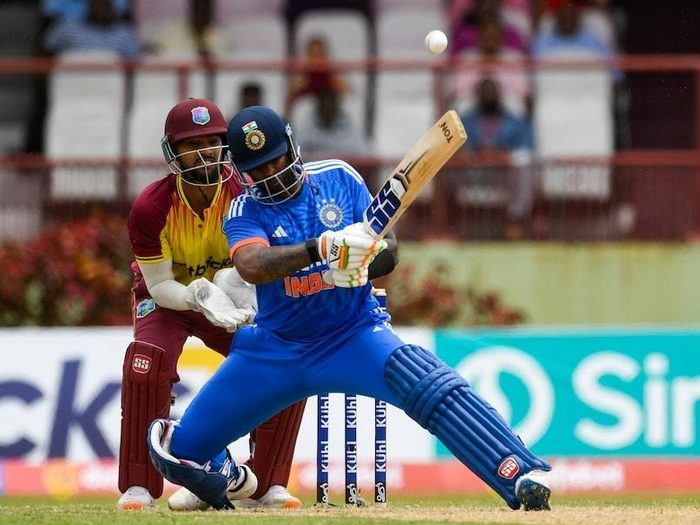
India’s third T20 International against West Indies is one of the day’s most anticipated fixtures.
The match is scheduled at Holkar Cricket Stadium in Indore, with the series level at 1–1 after the first two matches.
India won the opening game, while West Indies responded in the second contest, creating an important opportunity for either side to take the lead.
India’s Batting Approach
India’s T20 batting strategy generally focuses on maintaining a high scoring rate while preserving enough wickets for the closing overs.
The opening batters are responsible for making effective use of the powerplay, when fielding restrictions create opportunities for boundaries.
Middle-order players must then adapt to the match situation.
If the opening partnership is successful, the middle order can continue attacking. However, early wickets may require a more controlled approach.
West Indies’ Power-Hitting Threat
West Indies have a long history of producing powerful T20 batters.
Their aggressive approach can be particularly dangerous on surfaces that provide consistent bounce and allow players to hit through the line.
India’s bowlers must therefore maintain accurate lengths and avoid predictable deliveries.
Variation in pace, disciplined yorkers, and effective field placements can help restrict scoring opportunities.
Key Battle: Indian Spinners vs West Indies Middle Order
One of the most important tactical battles is likely to involve India’s spin bowlers against West Indies’ middle-order batters.
Spinners can disrupt scoring through changes in pace, flight, and length.
However, aggressive batters may attempt to counterattack by targeting shorter boundaries.
The success of this contest could determine whether West Indies build a competitive total or lose wickets during the middle overs.
Key Battle: India’s Top Order vs West Indies Fast Bowlers
West Indies’ pace attack will aim to take early wickets and prevent India from establishing a strong powerplay platform.
For India’s batters, rotating the strike and choosing the right deliveries to attack will be essential.
An early breakthrough could force India to reconsider its batting approach, while a strong opening partnership could create the foundation for a substantial total.
Pakistan vs Sri Lanka: A Competitive T20 Contest
Pakistan and Sri Lanka are also scheduled to meet in the second T20 International of their series in Rawalpindi.
Both countries have strong cricket traditions and a history of competitive limited-overs encounters.
Pakistan’s Pace Bowling Strength
Pakistan has historically produced fast bowlers capable of generating pace, swing, and seam movement.
The effectiveness of the new-ball attack can be particularly important in T20 cricket.
Early wickets place pressure on the opposition’s middle order and can reduce scoring opportunities during the powerplay.
Sri Lanka’s Spin Bowling Options
Sri Lanka has a strong tradition of developing technically skilled spin bowlers.
Spin can become particularly influential during the middle overs, when fielding restrictions are reduced and batters must carefully balance aggression with risk.
Key Battle: Pakistan’s Batters vs Sri Lanka’s Spin Attack
The ability of Pakistan’s batters to rotate the strike against spin could influence the match.
Players who rely exclusively on boundaries may struggle when bowlers maintain accurate lengths.
Effective footwork and intelligent shot selection can help batters maintain momentum.
The match also provides an opportunity to observe how both teams adjust their strategies under T20 conditions.
South Africa vs Australia: A Test Cricket Battle
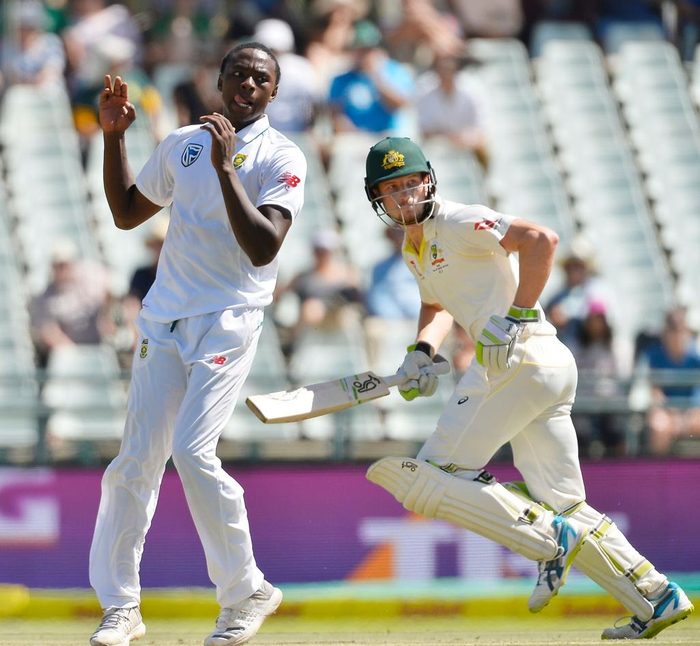
South Africa and Australia are contesting the first Test of their series at Kingsmead in Durban.
Australia’s first innings was built around an outstanding 190 from Matthew Renshaw, helping the visitors reach 390 despite earlier batting difficulties.
South Africa faced a challenging response against Australia’s experienced bowling attack.
Australia’s Fast Bowling Attack
Australia’s pace attack features experienced international bowlers capable of exploiting movement and bounce.
Mitchell Starc, Pat Cummins, and Josh Hazlewood provide different bowling styles.
Starc is known for left-arm pace and the ability to attack the stumps.
Cummins combines accuracy, bounce, and tactical awareness.
Hazlewood is particularly effective when maintaining a consistent line and length.
South Africa’s Batting Challenge
South African batters must balance defensive discipline with scoring opportunities.
In Test cricket, surviving difficult bowling spells can be just as important as scoring quickly.
Batters must assess the movement of the ball, identify suitable deliveries to attack, and avoid unnecessary risks.
Key Battle: Australia’s Pace Bowlers vs South Africa’s Top Order
The contest between Australia’s fast bowlers and South Africa’s leading batters is one of the most important aspects of the match.
Early wickets could allow Australia to maintain control, while a substantial partnership could help South Africa recover.
Unlike T20 cricket, Test matches reward patience, technical consistency, and the ability to perform over extended periods.
India A vs Australia A: Emerging Players in Focus
India A and Australia A are competing in the third match of their one-day series.
Development-level international matches are important because they allow selectors to assess players who may eventually represent their senior national teams.
Why India A Matches Matter
India A provides opportunities for emerging cricketers to gain experience against international opposition.
These matches test batting technique, bowling consistency, physical conditioning, and tactical decision-making.
Players who perform consistently may strengthen their prospects for future senior-team selection.
Key Battle: Emerging Indian Batters vs Australian Pace
Australia’s cricket development system has traditionally emphasised fast bowling and competitive domestic cricket.
Facing disciplined Australian pace bowlers provides an important test for young Indian batters.
Success requires strong footwork, controlled stroke selection, and the ability to adapt to changing match conditions.
What Selectors Will Watch
Selectors are likely to consider more than total runs and wickets.
They may also evaluate how players respond to pressure, manage difficult situations, and contribute through fielding and teamwork.
Strong performances in India A matches can therefore be important career milestones.
Key Cricket Players to Watch Today
Individual performances often determine the outcome of close cricket matches. Several players involved in today’s international fixtures deserve particular attention.
1. Abhishek Sharma – India’s Aggressive Opening Batter
Abhishek Sharma is one of India’s exciting attacking batters in T20 cricket.
His ability to score quickly during the powerplay can help India establish early momentum.
Abhishek’s approach involves aggressive stroke play, strong timing, and the confidence to attack pace and spin.
Against West Indies, his performance is particularly important because both teams possess powerful batting lineups.
A successful opening partnership could give India’s middle order greater freedom to attack during the later overs.
During the third T20I in Indore, Abhishek demonstrated his attacking ability by reaching a half-century in just 18 balls.
2. Shreyas Iyer – India’s Captain and Middle-Order Leader
Shreyas Iyer leads India in the T20I series against West Indies.
His responsibilities extend beyond batting.
As captain, Iyer must manage bowling changes, adjust field placements, and make tactical decisions based on match conditions.
His ability to play spin bowling and maintain scoring momentum makes him an important middle-order player.
In a high-scoring T20 contest, his decisions about when to introduce spinners or specialist death bowlers could influence the outcome.
3. Shai Hope – West Indies’ Captain and Key Batter
Shai Hope is one of West Indies’ most experienced batters and leads the side in the series.
Hope is known for his technical ability, controlled stroke play, and capacity to build substantial innings.
His leadership is particularly important in matches where West Indies must balance aggressive batting with sensible decision-making.
In the second T20I, Hope contributed to an important partnership with Sherfane Rutherford that helped West Indies level the series.
His ability to maintain composure under pressure makes him a player India must monitor carefully.
4. Sherfane Rutherford – West Indies’ Power-Hitting Threat
Sherfane Rutherford provides West Indies with an aggressive batting option.
His strength lies in accelerating the scoring rate, particularly when facing pace bowling.
In T20 cricket, players capable of scoring boundaries consistently can change the direction of a match within a few overs.
Rutherford’s ability to attack during the middle and closing stages makes him an important player for India’s bowlers to contain.
5. Arshdeep Singh – India’s Left-Arm Pace Option
Arshdeep Singh provides India with a valuable left-arm bowling option.
His ability to bowl with the new ball and deliver yorkers during the closing overs makes him an important part of India’s T20 squad.
Against powerful West Indies batters, accuracy will be essential.
Arshdeep’s variations in pace and length could help India restrict scoring opportunities during the death overs.
6. Matthew Renshaw – Australia’s Test Match Performer
Matthew Renshaw’s 190 in Australia’s first innings against South Africa was one of the notable performances of the ongoing Test match.
His innings demonstrated the importance of patience and technical discipline in red-ball cricket.
Renshaw’s contribution helped Australia recover from a difficult position and establish a competitive total.
His performance also highlighted how one substantial innings can influence an entire Test match.
The Most Important Batting and Bowling Battles
Cricket matches are often decided by smaller contests within the overall game.
A leading batter may dominate most opponents but struggle against a particular bowling style.
Similarly, a bowler who performs well against aggressive batters may find it difficult to dismiss players who rotate the strike effectively.
Powerplay Batters vs New-Ball Bowlers
The powerplay is one of the most important phases in limited-overs cricket.
Fielding restrictions create opportunities for attacking batters, but the new ball may also provide swing and seam movement.
Bowlers aim to take early wickets, while batters attempt to establish momentum.
A strong powerplay can influence the scoring rate throughout the innings.
Middle-Order Batters vs Spin Bowlers
Spin bowling frequently becomes important during the middle overs.
Spinners use flight, turn, pace variations, and changes in length to create uncertainty.
Batters must decide when to attack and when to rotate the strike.
Teams that manage this phase effectively often enter the final overs with a strong platform.
Finishers vs Death Bowlers
The final overs of a T20 innings can produce dramatic changes in momentum.
Batters attempt to maximise boundaries, while bowlers rely on yorkers, slower balls, and carefully planned field placements.
Successful death bowling requires accuracy and the ability to remain composed under pressure.
Wicketkeepers and Fielding Pressure
Fielding can also determine important matches.
A sharp catch, direct-hit run-out, or successful stumping may change the balance of a contest.
Wicketkeepers contribute through dismissals, communication, and support for bowlers.
Strong fielding performances can be particularly important when teams are defending modest totals.
How Pitch Conditions Influence Today’s Cricket Matches
Pitch conditions are among the most important factors in cricket analysis.
Different surfaces produce different types of matches.
Batting-Friendly Pitches
A batting-friendly pitch generally offers consistent bounce and limited sideways movement.
Batters can play attacking shots with greater confidence.
High-scoring T20 matches are more likely when conditions favour stroke play, although bowling quality and boundary dimensions remain important.
Pace-Friendly Pitches
Some surfaces provide seam movement, swing, or extra bounce.
These conditions can benefit fast bowlers, particularly during the opening overs.
Batters may need to adopt a cautious approach until they become comfortable with the surface.
Spin-Friendly Pitches
Dry or worn surfaces may offer greater assistance to spin bowlers.
Spinners can exploit turn, variable bounce, and changes in pace.
Batters must use effective footwork and carefully select attacking opportunities.
Dew and Evening Conditions
Dew can affect evening matches by making the ball more difficult for bowlers to grip.
This may reduce the effectiveness of certain spin deliveries and slower-ball variations.
Teams sometimes prefer chasing when significant dew is expected.
However, the impact depends on local weather conditions and the specific playing surface.
Why the Toss Matters in Cricket
The toss allows the winning captain to choose whether to bat or bowl first.
Although winning the toss does not guarantee victory, it can provide a tactical advantage.
In Test cricket, captains may prefer batting first on a surface expected to deteriorate.
In T20 cricket, teams may choose to bowl first when evening dew could make chasing easier.
Weather forecasts, pitch preparation, and team strengths all influence the decision.
The toss also affects how captains use their bowling resources.
A team defending a target may prioritise wicket-taking opportunities, while a chasing team must manage the required run rate.
For fans, understanding the toss decision provides valuable context before the first delivery.
How to Analyse Today’s Cricket Matches
Cricket analysis becomes more meaningful when several factors are considered together.
Recent Player Form
A player’s recent performances can provide useful information about confidence and consistency.
However, individual scores should be considered alongside opposition quality and playing conditions.
Head-to-Head Records
Historical results can reveal patterns between teams.
Nevertheless, older results may have limited relevance when squads and conditions have changed.
Batting Depth
Teams with several capable batters may recover more effectively from early wickets.
Batting depth is particularly important in T20 cricket, where aggressive play creates dismissal risks.
Bowling Variety
A balanced bowling attack may include right-arm pace, left-arm pace, finger spin, and wrist spin.
Different bowling styles allow captains to respond to particular batting strengths.
Fielding Quality
Fielding is often overlooked in pre-match analysis.
However, dropped catches, missed run-outs, and unnecessary fielding errors can significantly influence results.
Match Situation
The importance of individual performances depends on the match situation.
A quick 30 runs may be extremely valuable during a difficult chase, while a slower innings could be useful when a team needs stability.
Understanding context is essential when evaluating cricket statistics.
T20 vs ODI vs Test Cricket: How Key Battles Change
Different cricket formats create different tactical priorities.
| Format | Main Tactical Focus | Important Battles |
| T20 | Rapid scoring and wicket-taking | Powerplay, spin matchups, death overs |
| ODI | Balancing aggression and stability | Middle-overs partnerships, bowling changes |
| Test | Patience and sustained pressure | New-ball spells, long partnerships, reverse swing |
T20 Cricket
T20 matches reward players who can make an immediate impact.
A short attacking innings or a successful bowling spell can change the result quickly.
One Day Internationals
ODIs require teams to balance scoring momentum with wicket preservation.
Batters must adapt their approach across different phases of the innings.
Test Cricket
Test cricket places greater emphasis on endurance, technique, and tactical patience.
Bowlers must maintain pressure over long spells, while batters need the discipline to survive difficult conditions.
These differences make cricket a uniquely versatile sport.
For additional analysis, read Is T20 Cricket Changing the Future of the Game? on Dafabet Sports India.
Where to Follow Today’s Cricket Matches
Fans can follow cricket fixtures through official tournament websites, sports news platforms, and live-score services.
The International Cricket Council provides schedules, match information, and international cricket updates.
Official cricket boards also publish team announcements, injury updates, and match reports.
For Indian cricket followers, the Board of Control for Cricket in India is an important source of national-team information.
Dafabet Sports India also provides cricket-related content covering major tournaments, player performances, and developments in international cricket.
Readers can explore the Dafabet Sports India Cricket section for additional articles.
Conclusion
Today’s cricket matches demonstrate why the sport remains one of the most exciting forms of competitive entertainment.
From India’s T20 contest against West Indies to the Test match between South Africa and Australia, each fixture features important tactical decisions and individual battles.
Players such as Abhishek Sharma, Shreyas Iyer, Shai Hope, Sherfane Rutherford, and Matthew Renshaw highlight the different skills required across cricket formats.
Understanding the powerplay, middle overs, death bowling, pitch conditions, and team selection can help fans appreciate the game beyond the scoreboard.
Whether following international cricket, domestic competitions, or emerging players, analysing key battles provides a deeper understanding of how matches develop.
For more cricket news, match previews, player analysis, and tournament coverage, visit Dafabet Sports India and explore its cricket section.