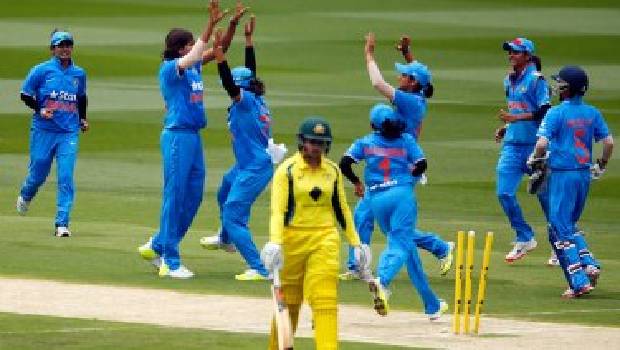
Indian women’s cricket has entered one of the most exciting periods in its history. What was once a sport fighting for recognition has developed into a major part of India’s cricketing landscape, supported by growing audiences, professional opportunities and a new generation of talented players. The transformation has been driven by years of international progress, investment in domestic competitions and landmark performances that have changed expectations surrounding the women’s game.
India’s historic victory at the 2025 ICC Women’s Cricket World Cup marked a defining moment in this journey. The team defeated South Africa by 52 runs in the final to secure its first Women’s ODI World Cup title, demonstrating the progress Indian women’s cricket had made on the international stage. The achievement strengthened the belief that India could compete consistently for major trophies rather than simply challenge established opponents.
As attention turns toward 2027, Indian women’s cricket is entering another important phase. Smriti Mandhana has taken over the captaincy, experienced players continue to provide stability, and emerging cricketers are competing for opportunities across formats. The Women’s Premier League (WPL) has also become an important platform for identifying and developing domestic talent.
With the inaugural ICC Women’s Champions Trophy scheduled to take place in India in February 2027, the national team has another opportunity to build on its recent achievements. This article explores India’s women’s cricket revolution, the rising stars shaping its future, the influence of the WPL and the challenges facing the team on the road to 2027.
The Rise of Women’s Cricket in India
Women’s cricket in India has experienced significant growth over the past decade, evolving from a relatively underrepresented sport into an increasingly prominent part of the country’s sporting culture. International performances, greater television exposure and the development of professional competitions have helped attract new audiences while creating more opportunities for female cricketers.
The 2017 Women’s Cricket World Cup was an important turning point. India reached the final against England, and Harmanpreet Kaur’s unbeaten 171 against Australia in the semifinal became one of the most memorable innings in women’s cricket. Although India did not win the tournament, its performances generated considerable public interest and encouraged greater recognition of the women’s national team.
The years that followed brought further progress as players such as Smriti Mandhana, Deepti Sharma, Jemimah Rodrigues and Shafali Verma became established international performers. Their achievements helped demonstrate the depth of talent available in Indian women’s cricket and contributed to changing perceptions of the sport.
The launch of the Women’s Premier League in 2023 created another major development. By providing a professional franchise competition featuring leading Indian and international players, the WPL offered domestic cricketers regular opportunities to experience high-pressure matches and improve their skills.
India’s Historic 2025 Women’s Cricket World Cup Victory
India’s victory at the 2025 ICC Women’s Cricket World Cup represented a major milestone for the national team. Playing the final against South Africa in Navi Mumbai, India produced a strong all-round performance to secure a 52-run victory and claim its first Women’s ODI World Cup title.
Batting first, India scored 298/7, with Shafali Verma contributing an attacking 87 and Deepti Sharma adding an important 58. The total placed South Africa under pressure, although captain Laura Wolvaardt responded with an impressive century during the chase.
Deepti Sharma then delivered a decisive bowling performance, taking five wickets for 39 runs as South Africa were dismissed for 246. Her contribution helped India complete a historic victory and demonstrated the importance of experienced all-rounders in major international matches.
The triumph was significant beyond the result itself. It showed that India could handle the pressure of a major final and convert years of development into a championship-winning performance. For younger players across the country, the victory provided a powerful example of what could be achieved through professional cricket.
A New Era Under Smriti Mandhana
The appointment of Smriti Mandhana as captain of the Indian women’s cricket team in October 2026 marked the beginning of another important chapter. After years of leadership under Harmanpreet Kaur, the national team entered a new phase with one of its most experienced batters taking responsibility for guiding the side across formats.
Mandhana has been an important figure in Indian women’s cricket since making her international debut in 2013. Her elegant left-handed batting, consistency at the top of the order and experience in international and franchise competitions have made her one of the team’s most influential players.
Her leadership experience includes captaining Royal Challengers Bengaluru to Women’s Premier League titles in 2024 and 2026. These achievements provide valuable preparation for managing a national side containing established international performers and emerging talent.
The challenge for Mandhana will be maintaining India’s recent success while preparing the next generation of players. Her decisions regarding batting combinations, bowling resources and squad development could have a significant influence on India’s performances during 2027 and beyond.
Rising Stars of Indian Women’s Cricket
India’s women’s cricket revolution is being supported by a growing group of young players who have demonstrated their abilities in domestic competitions, the WPL and international cricket. These cricketers bring different strengths to the national setup, including aggressive batting, wicketkeeping, spin bowling and pace-bowling options.
Their development is particularly important because international cricket requires more than a strong starting XI. Successful teams need squad depth, reliable replacements and players capable of adapting to different conditions. The emergence of talented young cricketers gives India more options when selecting teams for T20, ODI and Test matches.
Shafali Verma: India’s Explosive Opening Batter
Shafali Verma has become one of the most recognisable young players in Indian women’s cricket because of her aggressive batting approach. Her ability to attack bowlers during the powerplay makes her especially valuable in T20 cricket, where a strong opening partnership can establish momentum for the entire innings.
Verma played an important role in India’s 2025 Women’s Cricket World Cup triumph, scoring 87 in the final against South Africa. Her performance demonstrated that her attacking style could also be effective during major ODI matches, particularly when combined with disciplined shot selection.
She continued to develop during 2026, producing strong performances in the Women’s Asia Cup and Asian Games. Her achievements earned her the ICC Women’s Player of the Month award for September 2026, reflecting her growing influence across international competitions.
As India prepares for 2027, Verma’s ability to provide rapid starts and contribute occasional overs with the ball could make her an important part of the team’s plans.
Jemimah Rodrigues: A Key Middle-Order Batter
Jemimah Rodrigues has developed into an important member of India’s batting line-up through her ability to build partnerships, rotate strike and accelerate when required. Her batting style provides a useful balance alongside more aggressive players, particularly when the team loses early wickets.
Rodrigues is especially valuable during the middle overs, when teams must maintain their scoring rate while protecting wickets. Her ability to find gaps and manage bowling matchups allows India to construct innings without relying entirely on boundary hitting.
Her development has also been influenced by experience in franchise cricket and international competitions. Playing alongside established cricketers has helped strengthen her tactical awareness and ability to perform in different match situations.
After recovering from a hamstring injury that affected her availability during parts of 2026, Rodrigues was named in India’s squads for the December tour of South Africa. Her return provides additional batting depth as the team prepares for future international challenges.
Richa Ghosh: India’s Powerful Wicketkeeper-Batter
Richa Ghosh represents another important part of India’s next generation. As a wicketkeeper-batter, she provides valuable flexibility because she can contribute behind the stumps while also playing an attacking role in the middle or lower order.
Her powerful batting is particularly useful during the final overs of limited-overs matches. When India needs quick runs, Ghosh can attempt to accelerate against pace and spin, making her an important option for finishing innings.
However, her contribution extends beyond boundary hitting. Wicketkeeping requires concentration, quick reactions and an understanding of bowling plans, particularly when standing up to spinners. Developing these skills alongside her batting makes Ghosh a valuable player across formats.
As India’s squad continues to evolve, her ability to combine reliable wicketkeeping with aggressive batting could remain central to the team’s long-term strategy.
Sree Charani: An Emerging Spin-Bowling Talent
Sree Charani is among the promising young bowlers contributing to India’s expanding spin resources. Her left-arm spin provides variation and can be particularly effective during the middle overs, when teams attempt to control scoring and create pressure through disciplined bowling.
Charani demonstrated her potential during India’s successful 2026 Women’s Asia Cup campaign. In the final against Sri Lanka, she produced an influential bowling performance, taking four wickets as India secured a convincing victory.
Performances of this kind are important because international teams need bowlers who can deliver under pressure rather than simply perform well in favourable conditions. Young spinners must learn to adjust their pace, length and field placements according to the opposition.
With further international exposure, Charani has the opportunity to develop into a dependable bowling option for India across different formats.
Kranti Gaud: A Promising Pace-Bowling Option
Kranti Gaud is another young player who represents the increasing depth of Indian women’s cricket. As a pace bowler, she provides an alternative to the spin-heavy combinations traditionally associated with Indian conditions.
Fast bowling is particularly important when India competes overseas, where pitches may offer additional bounce, movement or assistance for seamers. Developing a group of reliable pace bowlers can help the national team adapt more effectively to different environments.
Gaud’s selection in India’s international squads reflects the opportunities available to emerging bowlers. Her continued development will depend on improving consistency, managing different phases of an innings and gaining experience against leading international batters.
The presence of younger pace options also creates healthy competition within the squad, encouraging established players and newcomers to maintain high performance standards.
G. Kamalini: A Young Wicketkeeping Prospect
G. Kamalini is one of the younger players attracting attention through domestic and franchise cricket. Her wicketkeeping and batting abilities provide India with another potential option as the team develops its next generation of players.
Kamalini was included in India’s T20I squad for the December 2026 tour of South Africa, highlighting her progress toward international opportunities. Competing for places alongside established players such as Richa Ghosh creates a challenging environment, but it can also accelerate development.
For young wicketkeeper-batters, consistent performance requires balancing two demanding responsibilities. They must contribute runs while maintaining concentration and technical accuracy behind the stumps.
Kamalini’s future will depend on how effectively she develops these skills, but her emergence reflects the increasing number of young Indian players competing for professional opportunities.
The Women’s Premier League and Its Impact on Indian Cricket
The Women’s Premier League has become one of the most important developments in Indian women’s cricket. Since its launch in 2023, the competition has provided domestic players with opportunities to compete alongside experienced international cricketers in a professional environment.
The WPL features five franchises: Mumbai Indians, Delhi Capitals, Royal Challengers Bengaluru, UP Warriorz and Gujarat Giants. Each team combines established international players with Indian talent, creating a competitive structure that encourages individual development.
For emerging cricketers, the league provides experience that can be difficult to obtain through domestic competitions alone. Players face high-quality bowling attacks, learn to perform in front of large audiences and become familiar with the tactical demands of professional T20 cricket.
The competition also creates opportunities for coaches and selectors to evaluate players under pressure. A strong WPL performance does not automatically guarantee international selection, but it can demonstrate whether a player possesses the skills and temperament required at a higher level.
How the WPL Is Developing India’s Future Stars
One of the WPL’s greatest contributions is the opportunity it provides for young Indian players to learn directly from experienced international cricketers. Training alongside established performers exposes emerging players to different approaches to preparation, fitness, match analysis and tactical decision-making.
For example, a young Indian batter may improve her ability to handle short-pitched bowling by practising against experienced international pace bowlers. A developing spinner may learn how to vary flight and pace while working with established bowling specialists.
The WPL also encourages players to develop specific roles. Rather than simply being selected as batters or bowlers, cricketers may be trained to perform particular functions, such as attacking during the powerplay, controlling the middle overs or finishing an innings.
This role-based development is important because international T20 cricket increasingly rewards teams that understand how to use individual strengths effectively.
India’s Women’s Cricket Strategy for 2027
India’s preparations for 2027 will involve balancing immediate tournament objectives with long-term squad development. The team has experienced players capable of performing in major competitions, but it must also create opportunities for younger cricketers who could become important contributors in future years.
One strategic priority will be maintaining strong batting partnerships. Players such as Smriti Mandhana and Shafali Verma provide different strengths at the top of the order, while Jemimah Rodrigues and Harmanpreet Kaur offer experience through the middle overs.
Bowling balance will also be important. India possesses established spin options through Deepti Sharma and emerging players such as Sree Charani, but successful performances overseas may require reliable pace bowling and adaptable fielding strategies.
Another challenge will be managing player workloads. With international cricket, domestic competitions and franchise tournaments contributing to increasingly busy schedules, maintaining fitness and availability will remain essential.
The ICC Women’s Champions Trophy 2027
One of the most important upcoming events for Indian women’s cricket is the inaugural ICC Women’s Champions Trophy 2027. The tournament is scheduled to take place from 14 to 28 February 2027 in India, providing the national team with another opportunity to compete for a major international title on home soil.
Unlike the men’s ODI Champions Trophy, the inaugural women’s competition will be played in the T20 International format. Six teams are scheduled to participate: India, Australia, England, New Zealand, South Africa and Sri Lanka.
Matches will take place at the Cricket Club of India in Mumbai and the Vadodara International Cricket Stadium. The competition will use a single round-robin format, with each team playing the other five sides once before the top two teams advance to the final.
For India, the tournament represents an opportunity to demonstrate consistency against leading international opponents. Home conditions may provide familiarity, but the team will still need to perform effectively against high-quality bowling attacks and experienced batting line-ups.
Key Challenges Facing Indian Women’s Cricket
Despite its recent success, Indian women’s cricket faces several challenges as it continues developing. Maintaining consistent international performances is one of the most important. Winning a major tournament represents a significant achievement, but remaining competitive across formats requires ongoing improvement.
Another challenge involves developing sufficient depth in specialist positions. While India has several established batters and spin bowlers, creating reliable alternatives in pace bowling, wicketkeeping and lower-order batting will strengthen the team over time.
The transition between generations also requires careful management. Experienced players provide leadership and stability, while younger cricketers need opportunities to develop confidence. Selecting the right combination can be difficult, particularly when major tournaments place pressure on teams to prioritise immediate results.
Finally, the continued growth of women’s cricket depends on opportunities beyond the national team. Strong domestic structures, coaching resources and accessible development pathways are necessary to ensure talented players from different regions can progress toward professional cricket.
Why Women’s Cricket Is Attracting More Attention in India
The increasing popularity of women’s cricket reflects a combination of international success, professional investment and greater visibility. Major performances by the national team have encouraged more fans to follow women’s competitions, while the WPL has created regular opportunities for supporters to engage with leading players.
The presence of established stars and emerging talent also makes the sport more accessible to younger audiences. Players such as Smriti Mandhana, Shafali Verma and Richa Ghosh represent different playing styles and career pathways, providing aspiring cricketers with a wider range of role models.
Professional competitions have also improved the visibility of domestic talent. Players who previously received limited attention can now demonstrate their abilities in nationally followed matches, helping strengthen interest in women’s cricket beyond international tournaments.
As the sport continues developing, maintaining competitive domestic competitions and international opportunities will be important for sustaining this growth.
Following Indian Women’s Cricket Matches and Updates
Fans following India’s women’s cricket team can use match statistics, player form and team announcements to better understand how the side is developing. Information such as batting averages, strike rates, bowling economy rates and recent performances can provide useful context when comparing players and evaluating team combinations.
However, individual statistics should always be considered alongside match conditions and opposition quality. A batter’s performance on a difficult pitch may be more valuable than a higher score in favourable conditions, while a bowler’s economy rate can be influenced by the stage of the innings in which they operate.
Cricket followers interested in accessing platform information through smartphones can explore Dafabet mobile. Existing users can visit the Dafabet login page to access their accounts, while eligible users can review available offers and applicable conditions through Dafabet Promotions.
Anyone following cricket betting markets should remember that past performances and player statistics cannot guarantee future results. Injuries, pitch conditions, team selection and individual performances can all influence match outcomes, so betting should always be approached responsibly and within predetermined financial limits.
The Future of Women’s Cricket in India Beyond 2027
The future of Indian women’s cricket will depend on how effectively the sport builds upon its recent achievements. International trophies can generate attention, but long-term progress requires investment in domestic competitions, coaching, facilities and player development.
The Women’s Premier League is likely to remain an important part of this process because it provides professional opportunities and regular exposure to competitive cricket. As more young players enter the system, franchises and national selectors will have a wider pool of talent to evaluate.
The development of specialist skills will also become increasingly important. Modern cricket requires batters who can adapt to different formats, bowlers capable of performing during specific phases and fielders who contribute consistently under pressure.
India’s challenge will be transforming its expanding talent pool into sustained international success. If the national team continues combining experienced leadership with emerging talent, the progress achieved in recent years could provide a strong foundation for future generations.
Final Thoughts
India’s women’s cricket revolution has been shaped by years of determination, improving professional opportunities and outstanding performances on the international stage. The historic 2025 Women’s Cricket World Cup victory demonstrated how far the national team had progressed and created new expectations for future competitions.
With Smriti Mandhana leading the side into a new era, established players and emerging talents will have important roles in maintaining that progress. Cricketers such as Shafali Verma, Jemimah Rodrigues, Richa Ghosh, Sree Charani and Kranti Gaud represent the depth and variety of talent available to India.
The Women’s Premier League continues to strengthen the development pathway by providing domestic players with opportunities to compete alongside leading international cricketers. Meanwhile, the inaugural Women’s Champions Trophy in February 2027 offers another major opportunity for India to demonstrate its competitiveness.
The road to 2027 is therefore about more than preparing for a single tournament. It represents the next stage in building a women’s cricket system capable of developing talent, sustaining international success and inspiring future generations of Indian players.